Acerola Benefits & Information
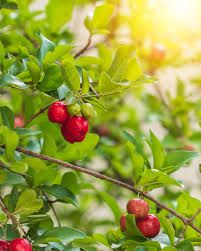
Acerola (Malpighia emarginata) is a significant source of vitamin C in the natural form of ascorbic acid, containing as much as 1000 to 4500 milligrams per 100 grams of fruit.
Vitamin A is another important nutrient found in the acerola, yielding as much as a bundle of full-sized carrots. It also contains significant amounts of vitamins B1, B2, B3 and B5 (pantothenic acid), as well as folate, choline, calcium, iron, magnesium, phosphorus, potassium and zinc.
Additional micronutrients found to a lesser degree in the fruit include several B-vitamins, calcium, iron, phosphorus, potassium, selenium, sodium and zinc. Fiber, protein and trace minerals are also found in acerola.
Acerola is also known as: Barbados cherry, West Indian cherry and Cereza. It has its origins in the tropical regions of Mexico, Central America and South America. In ancient times, it was used as a staple food.
Acerola is a small tree or bushy shrub that grows best in tropical type climates and has poor cold tolerance. It is easy to grow and is sometimes used as a hedge. The plant itself can grow to a height of approximately 15 feet, which makes for easy harvesting.
Once the fruit is harvested from the plant it must be used or converted into its supplemental form quickly because deterioration is rapid. Within three to five days the picked fruit ferments and becomes unsavory, develops mold and loses its healthful properties.
Acerola supplements are available as powder extract to be mixed into water, fruit or vegetable juices. No standard dosing exists for acerola supplements as dosing is dependent upon several variables including age, current health and pre-existing conditions. Common dosing is one level teaspoon, or 3.6 grams, of powder mixed with an 8-ounce beverage and taken three to five times a week. Some manufacturers might also market acerola in oral capsule form as vitamin C. Review package labeling for proper instruction.
Clinical evidence suggests that the high antioxidant properties, which comes from the vitamins A and C, of acerola might serve as a significant element in the regular diet, as evidenced by several published research studies. Research is ongoing to determine its exact benefits and potential long term adverse effects.
Đăng ký bản tin của chúng tôi
Bạn thích bài viết này? Tham gia The WomenLoveHerbs Weekly — một loại thảo dược, một nghi thức, một góc nhìn mới mỗi thứ Ba, miễn phí.