Reading a Herb Label Like a Herbalist
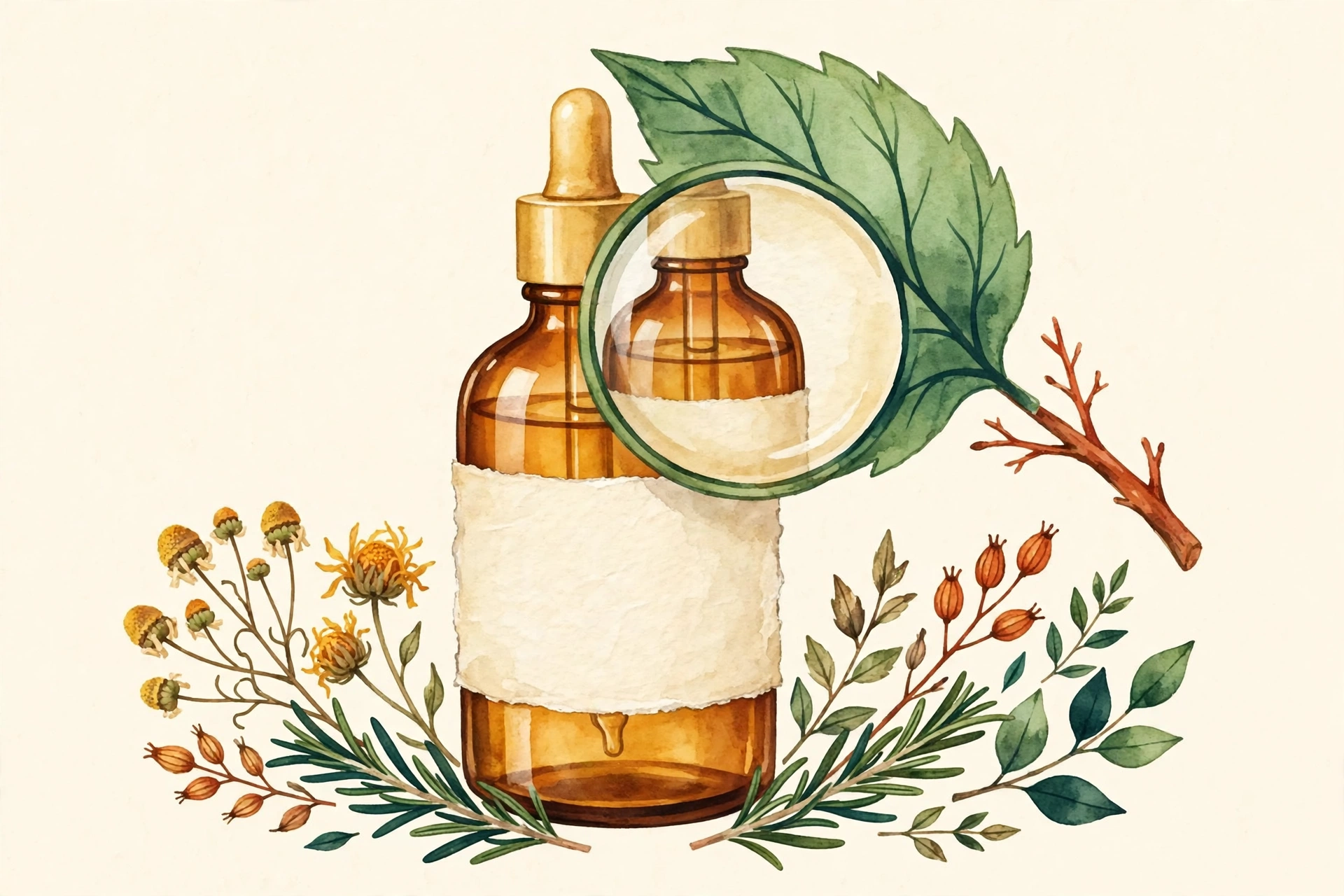
Two bottles, same herb, same shelf. One tells you almost nothing. A herbalist can tell the difference in ten seconds — and after this lesson, so can you.
- Find the Latin name. Labels should give the plant's botanical name (for example, Matricaria chamomilla for German chamomile). Common names collide — several unrelated plants share them — but Latin names identify exactly one plant. No Latin name is a small red flag.
- Find the plant part. Root, leaf, flower, and seed of the same plant can act differently and are prepared differently. Good labels say which part is inside ("flower", "leaf", "root").
- Find the amount and the form. How much per capsule or per gram of tea? Is it whole herb, an extract, or a tea cut? Vague words like "proprietary blend" hide amounts — herbalists prefer labels that show their work.
- The tradition lens. Herbalists have always identified plants precisely — by Latin name, part, season, and preparation — because "some mint, probably" was never good enough when preparing something for another person.
- The evidence lens. Studies are done on specific species, parts, and extracts. When a label doesn't match what was studied, the study's results may not apply to that bottle at all.
🛡️ Safety first
Three habits protect you: (1) buy from makers who show species, part, and amount; (2) start any new herb at the lowest suggested amount; (3) if you take medication, are pregnant, or have a condition, check first — and stop and seek advice if anything feels wrong. If a product promises to cure a disease, put it back: in Canada and the US, that claim on a supplement label is itself a warning sign.
🎯 Try it
Take one product from your shelf and find three things: the Latin name, the plant part, and the amount per serving. Notice how long it takes — that effort is the label telling you how transparent the maker is.
✏️ Quick quiz
WomenLoveHerbs is education only. Nothing here diagnoses, treats, or cures any condition, or replaces your healthcare professional.