What Is the Dampness Pattern?

You wake with a head that feels wrapped in a wet towel. Your body feels heavy, your thinking is cloudy, and breakfast sits in your stomach like a stone. TCM has a wonderfully physical word for that whole picture: Dampness — the pattern of internal weather turned swampy.
A pattern, not a disease. A TCM pattern is a cluster of signs that appear together — a traditional description of how the body is behaving, not a disease name and never a diagnosis. Dampness, Thấp, is what its name suggests: fluids that should move and transform instead pool and linger, the way mist hangs over a marsh. Everything it touches feels heavy, sticky and slow.
The everyday signs. A heavy body and a heavy, wrapped-feeling head. Bloating after meals, as if food just sits. A sticky taste in the mouth. Cloudy thinking — the classic foggy head. Puffiness, especially in the morning. Stools that are loose and sticky. One heavy morning is weather; the pattern is the cluster, returning again and again, often worse in humid weather.
What tends to contribute. In traditional thinking, dampness is made in the kitchen and the climate: living in damp, humid places; a diet heavy in greasy, fried and sweet food, cold raw food and alcohol; eating late and irregularly; and long sitting with little movement, which slows the transformation of fluids. TCM lays much of this at the digestive system's door — when transformation lags, dampness is what accumulates.
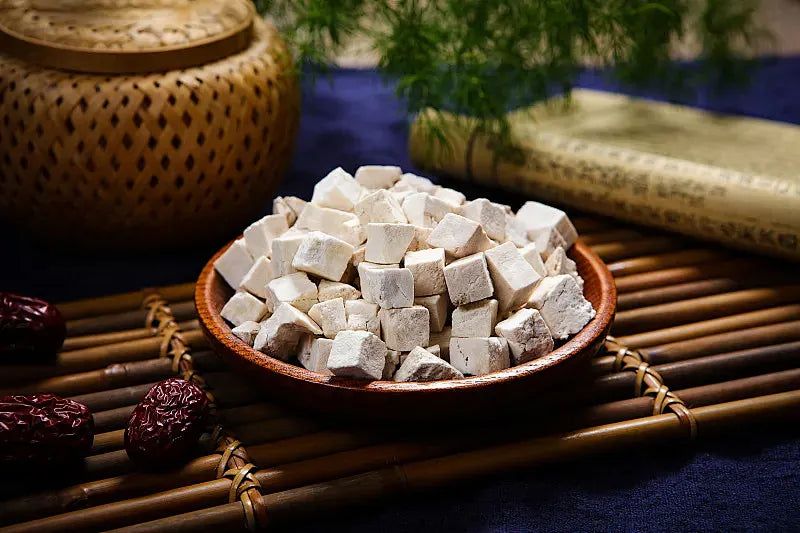
Gentle everyday support. The traditional direction is to lighten and move: warm, simply cooked meals over greasy ones; regular meal times; cooked vegetables and grains the digestion can actually finish; and daily movement — a walk after meals is the classic habit. Food As Medicine, here, means food your digestion can transform completely. The herbs traditionally studied with this pattern — poria, Job's tears and atractylodes — each have their own lesson in the herb track.
Where this pattern goes next. Dampness is the pattern the tongue shows most honestly — a thick, sticky coating is its signature, and Tongue Talk is built around reading exactly that. Then the herb lessons introduce this pattern's drying, draining herbs, one by one.
🛡️ Safety first
Pattern language teaches observation; it never replaces a workup. Persistent bloating, puffiness that pits when pressed, marked swelling, or stools that stay loose for weeks deserve a clinician — digestion, kidneys, heart and thyroid all belong on that real-world list. Draining and drying herbs are still medicines in concentrated form: check with your clinician or pharmacist before products or strong daily teas, especially in pregnancy or alongside diuretics or other medication.
🎯 Try it
For three days, add one line to your notes after lunch: "heavy or light?" — rate your body and head from 1–5, and write what lunch was. Greasy, sweet and late versus warm, simple and on time: the dampness pattern usually confesses within three lunches.
✏️ Quick quiz
WomenLoveHerbs is education only. Nothing here diagnoses, treats, or cures any condition, or replaces your healthcare professional.