Chrysanthemum: The Flower Tea on the Desk
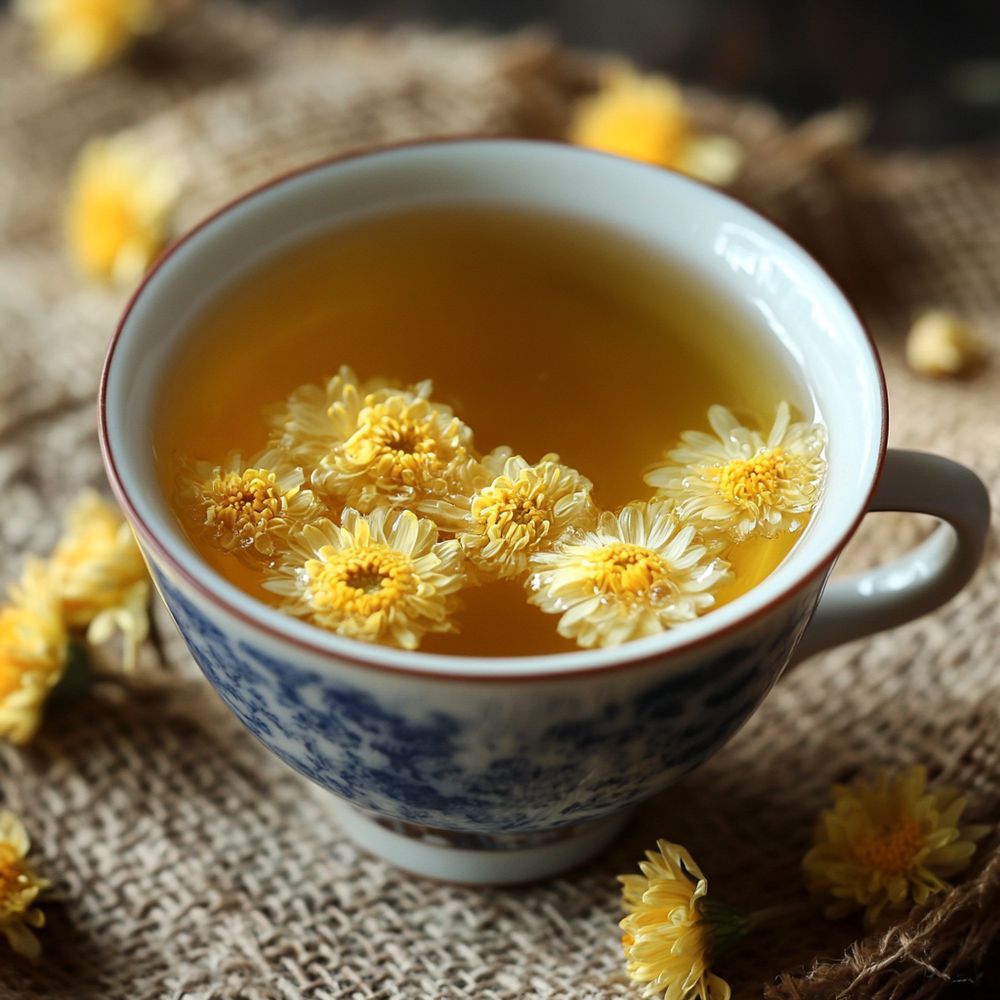
On office desks across China and Vietnam, beside the keyboard, there is often a clear glass of pale golden tea with whole flowers drifting in it. It gets topped up with hot water all afternoon. That is chrysanthemum tea — cúc hoa — one of the most everyday flower teas in the TCM world, and the herb at the heart of this lesson.
- Meet cúc hoa. Cúc hoa is the dried flower of Chrysanthemum morifolium, sold whole so you can watch the blossoms open in hot water. Two classic types appear in tea shops: white chrysanthemum (bạch cúc) and yellow chrysanthemum (hoàng cúc), both used the same friendly way — a few flowers, hot water, a clear glass if you want the full pleasure of it.
- Not chamomile — a common mix-up. Chrysanthemum and chamomile are both daisy-family flower teas, but they are different plants with different traditions. Chamomile (from Lesson 3) is the European evening nervine. Chrysanthemum is the Asian daytime desk tea. The flavours differ too: chamomile tastes apple-soft; chrysanthemum is honeyed, lightly floral, with a gentle cooling feel. One cannot stand in for the other.
- The tradition lens. In TCM, cúc hoa is a cooling flower: tradition describes it as clearing heat and calming the Liver in traditional language (thanh nhiệt, bình can), and traditional texts link it with bright, comfortable eyes — which is one reason it sits beside so many computer screens. In this course it is the signature herb of the Heat pattern (Nhiệt). A beloved classic pairing is chrysanthemum with goji berries in the same pot.
- The evidence lens. Modern research on chrysanthemum tea is limited — mostly laboratory work on its antioxidant compounds rather than clinical trials. The honest label: a beloved traditional flower tea with a long, gentle record as a drink. It is not a treatment for eye strain or any eye condition; persistent eye symptoms belong to an eye doctor. The ritual itself — pausing, looking away from the screen, drinking something warm — does its own quiet part.
🛡️ Safety first
Chrysanthemum belongs to the Asteraceae family — the ragweed and daisy family. If you are allergic to ragweed, daisies, chrysanthemums or chamomile, skip it or check with your clinician first. Traditional sources advise care in pregnancy, so check before making it a daily habit if you are pregnant or breastfeeding. Chrysanthemum may interact with blood-pressure medication and sedating medication, so a quick word with your pharmacist is wise if you take either. And buy food-grade dried flowers sold for tea — florist chrysanthemums are grown for looking at, not drinking, and may be sprayed.
🎯 Try it
Steep a few food-grade dried chrysanthemum flowers in hot water in a clear glass and watch them slowly open. Keep the glass at your desk through the afternoon, topping it up as it empties, instead of reaching for a second coffee. If you have goji berries from the earlier lesson, drop in a few — you have just made the classic pairing.
✏️ Quick quiz
WomenLoveHerbs is education only. Nothing here diagnoses, treats, or cures any condition, or replaces your healthcare professional.