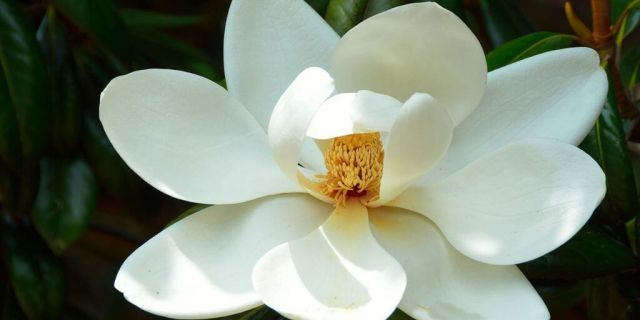
Magnolia
Medicinal uses
Active ingredients
Japanese researchers have determined that "honokiol" and "magnolol", two chemicals found in Magnolia Bark, are up to 1000 times more potent than Vitamin E in antioxidant activity. These two active compounds are thought to contribute to the primary anti-stress and cortisol-balancing effects of the plant. Numerous animal studies have demonstrated honokiol to act as an anti-stress agent at lower doses.
Cortisol has also been associated with weight gain (particularly fat in the abdominal area), sugar control problems, memory problems, and a host of other stress induced disorders.
Anxiety
Because honokiol reduces anxiety without disruption of motor activity, it is postulated that the mechanism of the anxiolytic effect of honokiol is at least partially different from that of diazepam.
Two biphenolic compounds found in Magnolia, Honokiol and magnolol, increase choline acetyltransferase activity, inhibit acetylcholinesterase, promote potassium-induced acetylcholine release and exhibit neurotrophic function in in vitro studies. Choline acetyltransferase is an enzyme involved in the cellular synthesis of acetylcholine, an increase of which can up-regulate the production of acetylcholine necessary for proper brain function. Acetylcholinesterase is an enzyme that breaks down acetylcholine, the inhibition of which preserves available acetylcholine. Honokiol and Magnolol also exhibited neurotropic effects in vitro, which could translate into enhanced brain cell growth and reduced brain cell death in vivo.
Asthma
Subscribe to our newsletter
Enjoyed this article? Join The WomenLoveHerbs Weekly — one herb, one ritual, one insight every Tuesday, free.