Jujube: The Little Red Date in Every Nourishing Soup
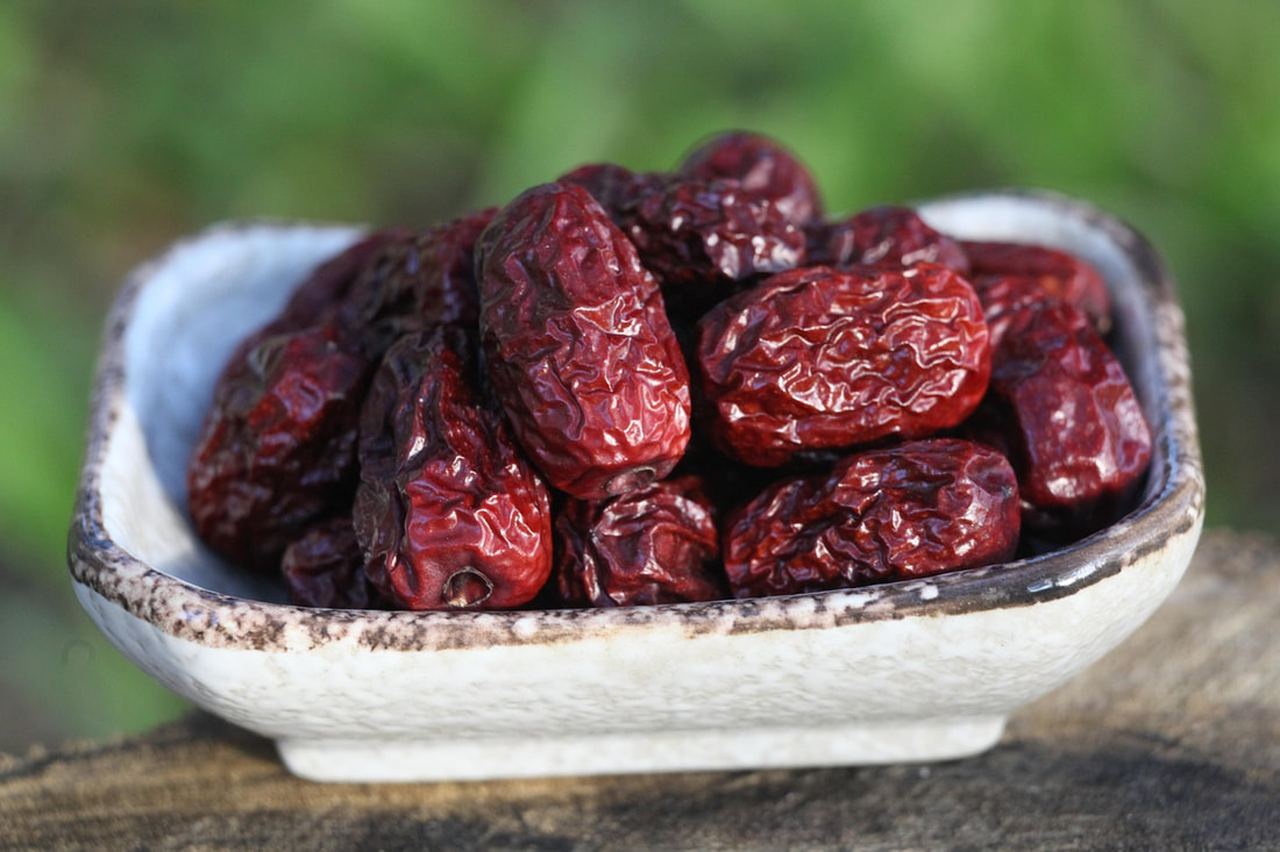
If you open the pantry of almost any Chinese grandmother, you will find a bag of dried red dates. Jujube (Ziziphus jujuba) is eaten fresh like a small crisp apple when ripe, but it is the dried red fruit — hong zao — that has earned a permanent place in women's cooking across Asia.
Meet the herb
Jujube is both food and herb, which is exactly why we love it at WomenLoveHerbs. Dried red dates are naturally sweet, rich in fibre, and a source of vitamin C and potassium. In the language of traditional Chinese medicine, jujube is considered warm and sweet, traditionally used in formulas and kitchen soups that support digestion and steady energy.
How tradition uses it
In TCM kitchens, red dates are the great team players. They are added to chicken soup, congee and herbal teas to round out flavours and soften stronger herbs — a classic pairing is jujube with goji berries and longan in a gentle evening tea. You will also meet them in the famous four-substance soup traditions alongside dong quai and rehmannia, where dates help make the pot taste like food, not medicine.
Simple ways to enjoy it
- Three-red tea: simmer 3–4 sliced red dates with a spoon of goji berries and a few pieces of dried longan for 15 minutes.
- Congee: add 2–3 dates to rice congee in the last 20 minutes of cooking.
- Soup: drop 3–5 whole dates into any chicken or mushroom soup pot.
- Snack: eat 2–3 dried dates with walnuts as an afternoon bite.
Remove the small hard stone before eating or cooking, and choose plump, glossy fruit that smells faintly of honey.
A gentle safety note
Jujube is a food with a long history of everyday use. It is naturally sweet, so if you are watching your sugar intake, enjoy it in modest amounts and count it as part of the meal. As with any herb used regularly, check with your healthcare professional if you are pregnant or taking medication.
Subscribe to our newsletter
Enjoyed this article? Join The WomenLoveHerbs Weekly — one herb, one ritual, one insight every Tuesday, free.