
Goji Berries: A Bright Spoonful for Busy Days
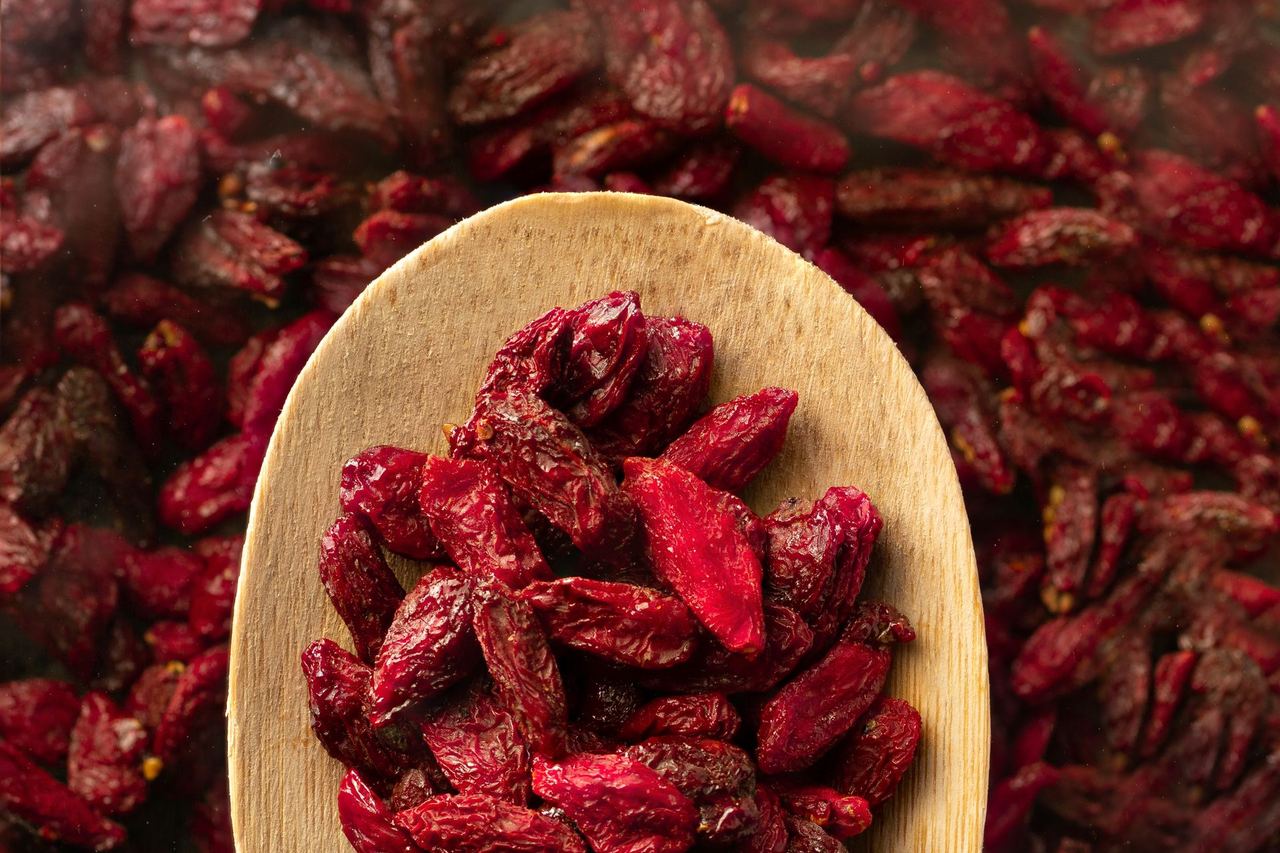
Pour hot water over a spoonful of goji berries and something lovely happens: the water blushes amber, the berries plump up, and a plain cup becomes a small ritual. Goji (Lycium barbarum), called gou qi zi in Chinese, has been simmered into soups and teas for centuries.
Meet the herb
Goji berries are the fruit of a hardy shrub grown across northern China. They are a natural source of carotenoids such as zeaxanthin — the pigment that gives them their sunset colour — along with vitamin C and fibre. In TCM language, goji is considered neutral and sweet, a classic "food tonic" herb traditionally paired with chrysanthemum in tea and with jujube in soups.
How tradition uses it
The most famous goji ritual is also the simplest: goji and chrysanthemum tea, sipped at desks across Asia. Cooks add a spoonful to chicken soup, congee and steamed dishes in the last minutes of cooking so the berries stay plump rather than bursting. A small handful — roughly a tablespoon — is the traditional kitchen amount.
Simple ways to enjoy it
- Desk tea: steep 1 tablespoon of goji with 3–4 chrysanthemum flowers in hot water for 5 minutes; eat the softened berries too.
- Breakfast: scatter over oatmeal, yogurt or congee.
- Soup: add in the final 10 minutes of any nourishing soup.
- Baking: use anywhere you would use raisins.
A gentle safety note
Goji is a food, but it deserves one clear caution: goji berries have been reported to interact with warfarin and may matter if you take blood-pressure or blood-sugar medication. If you take any regular medication, check with your healthcare professional before making goji a daily habit, and start with small amounts.
Subscribe to our newsletter
Enjoyed this article? Join The WomenLoveHerbs Weekly — one herb, one ritual, one insight every Tuesday, free.